Why get an arborist's opinion first?
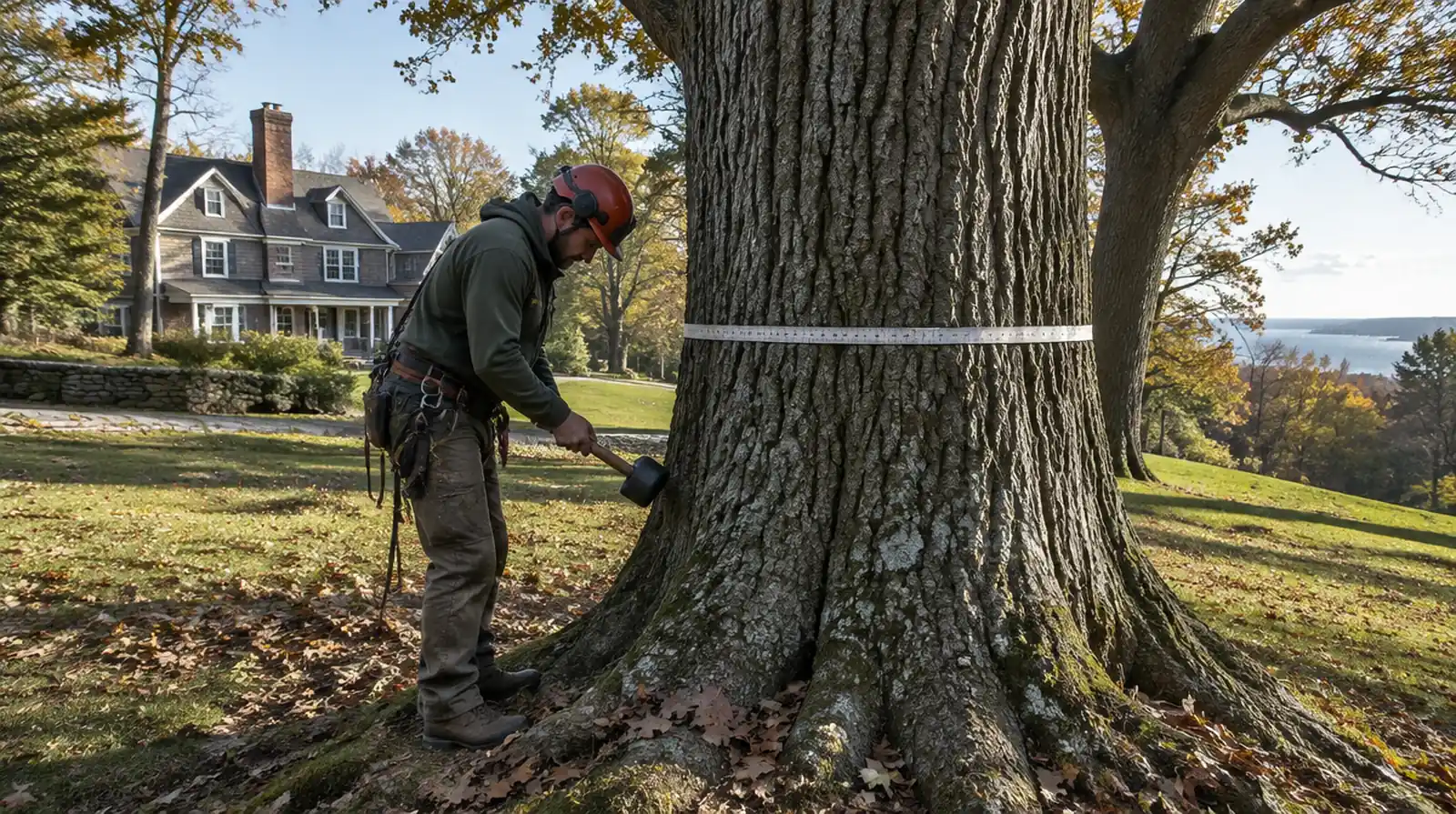
On a wooded lot in Oyster Bay Cove, Mill Neck or Locust Valley, the trees are often older than the houses. A copper beech or white oak that has stood for a century can be perfectly sound, or quietly hollow. Taking down a healthy specimen tree is a loss you cannot undo. Leaving a failing one over a roof or a driveway is a risk. A consultation sorts out which is which, and it costs far less than either mistake.
What we look at
- Structure: weak forks with bark trapped inside them, heavy limbs reaching over buildings, old pruning wounds and cracks.
- Decay: fungal fruiting bodies, cavities, hollow sound when tapped, and soft wood at the base. For a closer look, we can test inside the trunk to measure how much solid wood remains.
- Roots: soil heaving, root damage from past trenching or paving, girdling roots and grade changes.
- Health: leaf size and color, crown density, dieback and signs of insects or disease.
- Targets: what is under the tree and what it would hit.
Diseases worth watching on Long Island
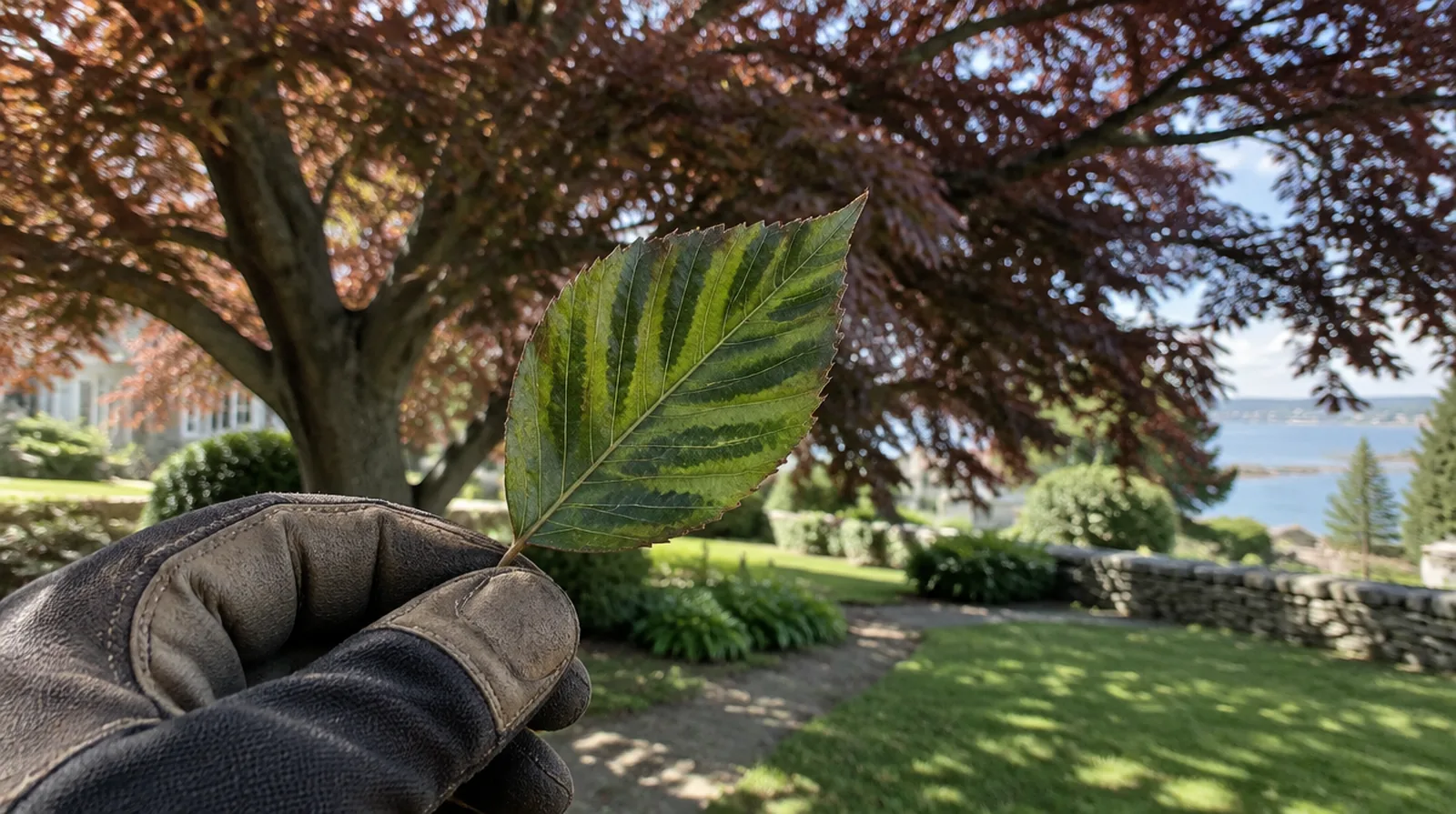
Beech leaf disease has spread through Long Island's beech trees, including the grand European and copper beeches on North Shore estates. It shows as dark bands between the leaf veins, followed by curled, leathery leaves and a thinning crown. It has no cure, but early diagnosis gives you time to try treatments with a certified applicator, improve care and plan ahead.
Oak wilt is a fungal disease that can kill red oaks quickly. New York has confirmed it on Long Island, and the state has rules for how infected wood is handled. Wood from infected trees has to be dealt with in specific ways, such as debarking, chipping or drying, to stop the spread. Pruning oaks in spring and early summer, when the beetles that carry the fungus are active, is best avoided. If an oak wilts suddenly in summer, call before anyone cuts it up.
Tree permits in the Town of Oyster Bay
The Town of Oyster Bay's tree preservation rules generally require a permit to remove a living tree eight inches or more in diameter. Dead or diseased trees can qualify for an exemption, but that decision is made by the Town, not by the homeowner or the tree company. Applications should go in well ahead of the work, and trees in the public right-of-way go through a separate process. Some incorporated villages within the town have their own rules. We can document a tree's condition with notes and photos so you have what you need when you contact the Town or your village, and we will not remove a protected tree until the paperwork is in order.
Protecting trees during construction
Renovations, additions, new pools and driveway work are the most common reasons healthy trees die a few years later. Heavy equipment compacts the soil, trenching cuts roots, and a few inches of added fill can smother them. Before a project starts, we can mark the critical root zone, recommend fencing to keep machines and materials out, and suggest how to route utilities around the roots. It is much easier than trying to save a tree after the damage is done.
Reports for buyers, sellers and insurers
Buying a property with mature trees? Settling a question with a neighbor over a tree on the line? Responding to an insurer that wants a tree addressed? We can provide a written summary of what we found, with photos and recommendations.
Common questions
Will you just recommend removal?
No. Most visits end with pruning, monitoring or improved care. Removal is for trees that cannot reasonably be made safe.
How long does a visit take?
For a typical lot, under an hour. Large estates with many trees take longer.
What if work is needed?
We can do it, from crown pruning and cabling to removal once the Town has signed off.