Replacing what the North Shore has lost
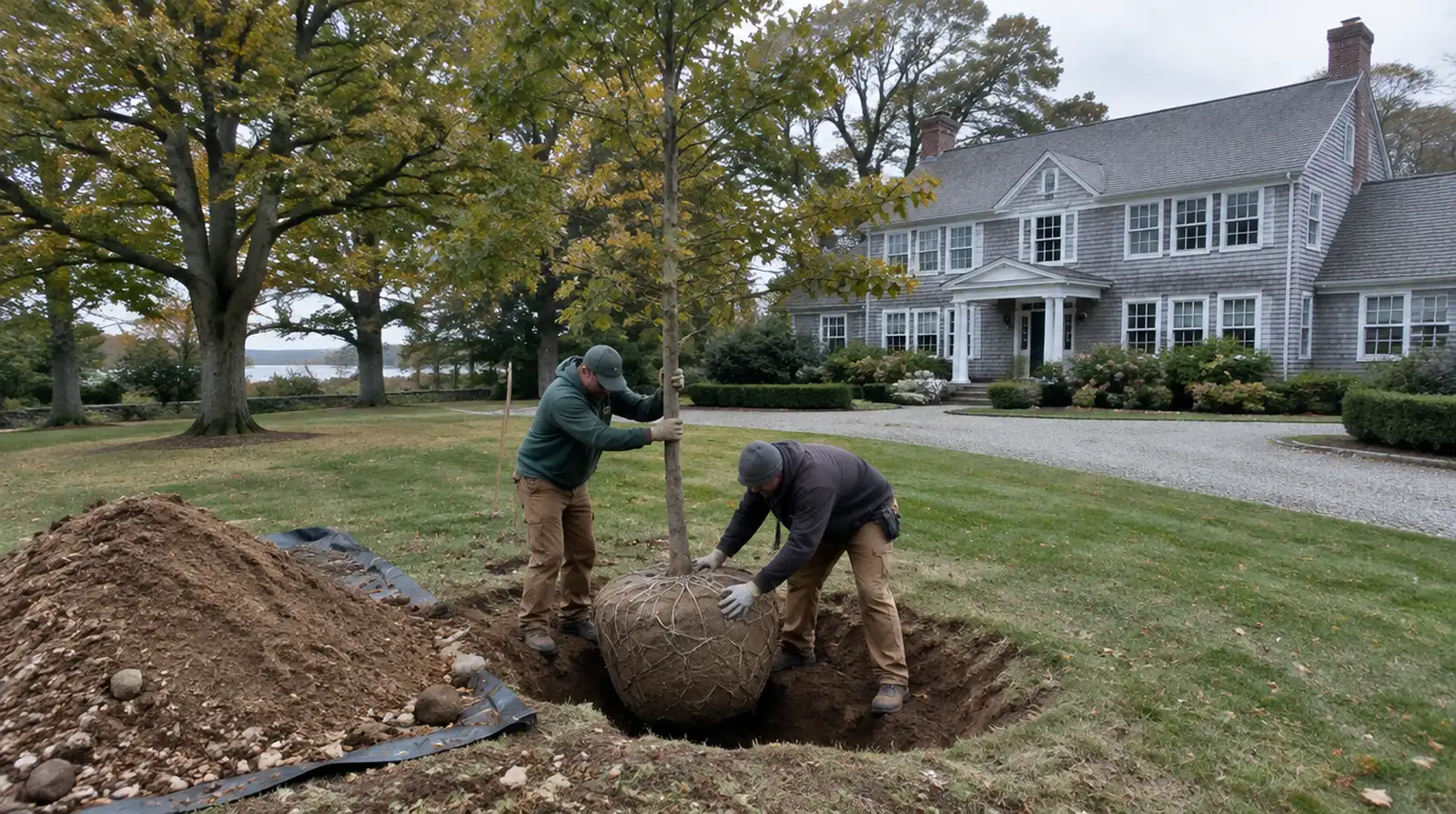
The big trees are a large part of what makes Oyster Bay, Locust Valley, Mill Neck and the surrounding villages feel the way they do. Many of them date from the era of the Gold Coast estates, when oaks, beeches, tulip trees and copper beeches were planted along drives and lawns. A century later, those trees are reaching the end of their lives. Hurricane Sandy in 2012 and the storms since have toppled more. Beech leaf disease, found on Long Island in recent years, is weakening American and European beeches across the area. Replacing them now means your property will have shade and structure again in 20 years.
Planting is also how you get privacy on a busy road, block the view of a new neighbor's addition, or soften a renovated house that lost its old trees during construction.
Picking the right tree for the site
Conditions change a lot within the Town of Oyster Bay. On the North Shore, soils from the glacial moraine are sandy and stony, well drained on the hills and wet in the low spots near the harbor. Waterfront properties in Bayville, Centre Island and along the bay get salt spray and wind. Farther south toward Syosset and Massapequa, the soil is sandier outwash. Species we often recommend:
- Native oaks such as white, red, scarlet and swamp white oak for long-lived shade.
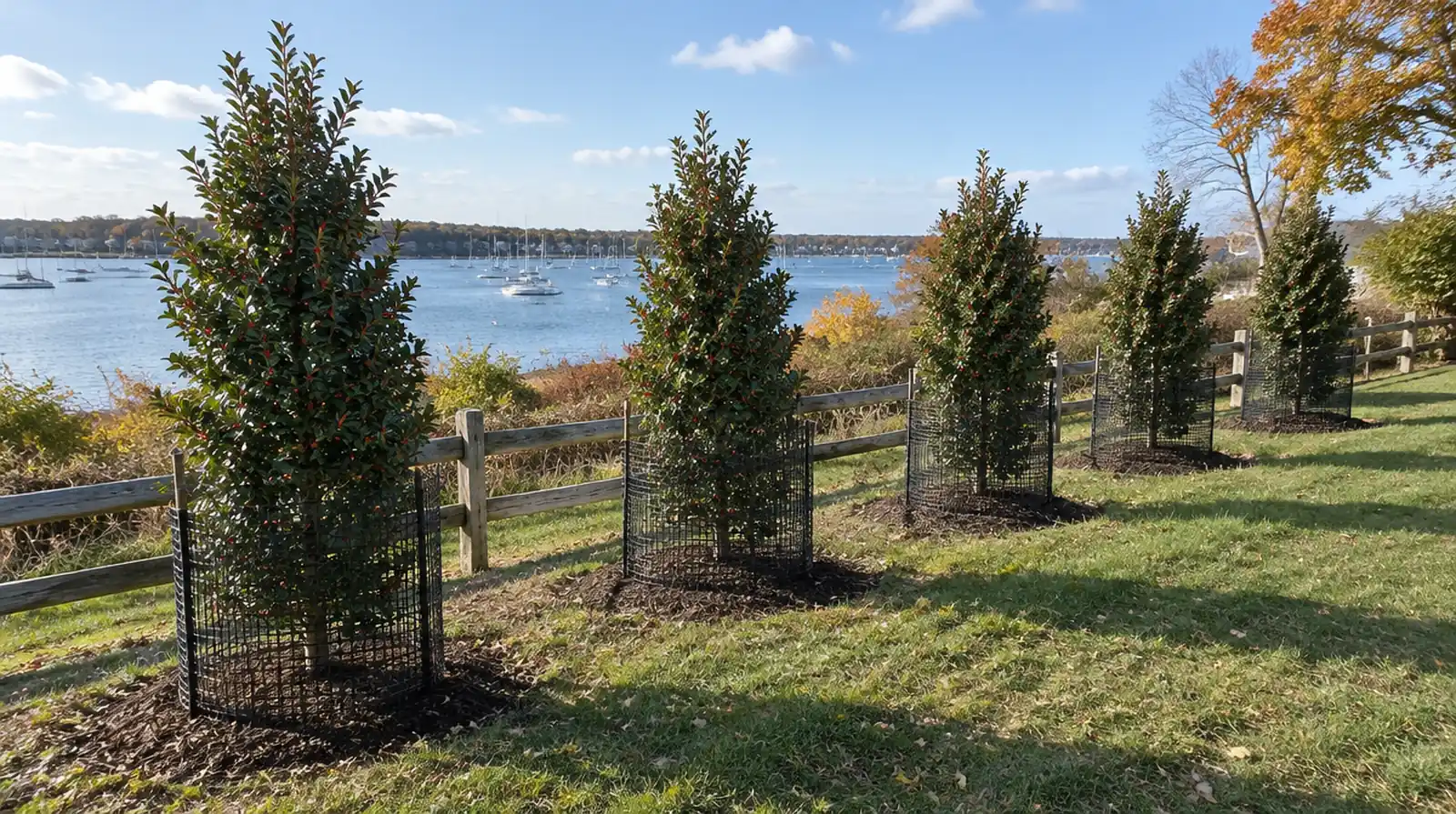
- American holly and eastern red cedar for evergreen screens that tolerate salt and sandy soil.
- Black tupelo and sweetgum for brilliant fall color and wet spots.
- Red maple and river birch near low areas that stay damp.
- Serviceberry, sweetbay magnolia and redbud for smaller gardens and the edge of a patio.
- Japanese zelkova, linden and honey locust where street conditions are tough.
We steer away from planting more beech until the disease is better understood, and we avoid lining a whole property with one species.
Deer, salt and wind
Deer are a real problem on the North Shore, especially near the preserves and wooded estates. They browse young trees and bucks rub their antlers on trunks in fall. We use tree guards or mesh cages on new plantings for the first few years and favor species deer tend to leave alone, like holly, red cedar and black tupelo. On the water, we set trees where buildings or existing woods break the wind, and stake only when the site is truly exposed.
Curb strips and town rules
Planting in the strip between the curb and sidewalk is town right-of-way, and the Town of Oyster Bay requires a permit for any planting there. The town code lists approved street trees, including red and hedge maple, honey locust, black tupelo, oaks, linden and Japanese zelkova. Incorporated villages such as Oyster Bay Cove, Mill Neck or Bayville may have their own rules, so we check before we dig. Every job starts with an 811 call to mark buried gas, electric and water lines.
How we plant
- Site visit. We look at sun, soil, drainage, overhead wires and how big the tree will get.
- Sourcing. We pick healthy nursery stock with a straight leader and good root flare.
- Planting. A wide, shallow hole, with the root flare at grade, burlap and wire cut back, and native soil as backfill.
- Mulch and protection. A wide mulch ring kept off the trunk, plus deer guards where needed.
- Watering plan. Clear instructions for the first two growing seasons.
Fall, from late September into November, is the best time to plant on Long Island. Early spring is the next best.
Sizing the tree
A bigger tree is not always better. A tree two to three inches in caliper usually settles in faster than a large specimen and often catches up within a few seasons. For instant privacy, we can source larger evergreens, but they need more water and more care in the first years.
After the planting
Young trees need deep, slow watering about once a week in their first two summers. In a few years, a structural prune sets up strong branches; our tree trimming crew can handle that. If an old tree is in decline and you are not sure whether to save it, book an arborist consultation first. If a stump is in the way of the new tree, stump grinding clears the spot. We also plant in Locust Valley, East Norwich, Glen Head and Syosset.